


Bankruptcy Basic: Don’t Lie
One of the most basic tenets of bankruptcy: don’t lie! It’s not a complicated concept but it is is not always followed. Bankruptcy affords filers a broad range of benefits. Chief among them is the ability to eliminate your debt. Since this is debt that cannot be afforded, bankruptcy can be a big help.
But to reap the bankruptcy benefits, there are obligations. Telling the truth is one of those requirements. When you file bankruptcy you must be truthful in disclosing all your personal and financial information. Your income, expenses and assets are all required in preparing your bankruptcy petition and paperwork.
 Your income, including your income history, is required as part of the bankruptcy process. Eligibility for certain bankruptcy filings, including both Chapter 7 & 13 filings, depend on the amount of income you earn. To file for Chapter 7 bankruptcy, your income must be lower than your expenses. For a Chapter 13 bankruptcy your must earn more than you spend. Whatever bankruptcy option you need, you must disclose accurate financial facts.
Same bankruptcy basic goes for disclosing your personal assets. When you file bankruptcy you can protect, or exempt, your property. In most consumer cases all property is protected. But you can’t lie. You must reveal all your property in your bankruptcy paperwork. Leaving out a home or car is a bad idea!
In addition to your personal information, another bankruptcy basic is to not lie about your debt. You must list it all in your bankruptcy petition and paperwork. You cannot pick and choose what debts to include in your bankruptcy. You must disclose all debts when you file bankruptcy. Eligibility and affordability of your bankruptcy is dependent on your accurate disclosure of your debts.
Even the debt you have and ability to discharge it through bankruptcy is reliant on truth. If you lied to obtain debt, you may not be able to eliminate it through a bankruptcy. The US Supreme Court recently ruled on this subject broadening the definition of fraud beyond just lying. This Wall Street Journal article reflects that ruling.
No matter the situation, when it comes to bankruptcy basics: don’t lie!
 It is common for people to be overpaid by the EDD and SSA for unemployment and other benefits. Millions of people file for and receive such benefits. Instruction and oversight covering the application for these benefits, though, is slight. Sometimes the money paid does not match the benefits earned. When the EDD or SSA finds out, debt can result. The EDD even has a link on their website concerning overpayments. But again, bankruptcy can discharge the overpayment of unemployment and Social Security Benefits.
 If, just considering the average credit card debt, the amount spent on interest in a few months is more than the cost of filing a bankruptcy, there is bankruptcy bang for the buck. It is easy to see why. Spending $1,500 filing for bankruptcy is less than the interest you pay on your credit cards over a few months. Spending money on your credit card interest gets you nowhere. Filing bankruptcy gets you a discharge and your debt is done.
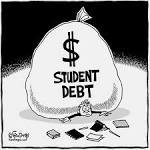 College costs have exploded and, along with it, debt. College degrees, once considered financial bedrock, have not held their value compared to their costs. If your graduate from college you should earn more. Right? Often this is not so. At least when it comes to the inflated costs to get the degree. Earning $1,000 more per month does little good if that comes with a lifetime debt of $1,200 per month. The math doesn’t make sense. Perhaps, then, now is the time to evaluate whether you should be able to discharge student loans.
 Posting pictures of property you did not disclose in a bankruptcy filing on social media is a really bad bankruptcy bad idea. Rapper 50 Cent may have put himself in this spot. Recently he posted on social media pictures of him surrounded by piles of cash. 50 Cent is in an active bankruptcy case now. If he did not disclose this money in his filing, he may be in big trouble.
 The incident has certainly garnered attention, as this Wall Street Journal article reflects. Being in bankruptcy obligates a debtor such as 50 Cent to comply with the mandates of bankruptcy law. In exchange, he is entitled to bankruptcy protection. This includes prevention of collection efforts and lawsuits from creditors. One such creditor suit in Mr. Jackson’s bankruptcy is from a sexual assault claim. If he wants to steer clear of that case in bankruptcy, he should steer clear of posting pictures of cash online.
 Like other forms of debt that can’t be afforded, bankruptcy may be a solution. Health insurance holes are a cause of potential debt. Like credit card debt, car repossessions or other unsecured debt, medical bills may prompt consumer bankruptcy. Unlike other forms of debt, though, medical care costs often come with a higher price tag.
 Paying only minimum payments will get you nowhere. It’s only financial benefit is to the credit card industry. Using this
  Bankruptcy is a financial tool to del with your debt. Maybe you file bankruptcy because you can’t afford any of it. Maybe you file because you can only pay part of it. An maybe, why Kanye West may be filing bankruptcy, you do it because you need to rearrange your debt to manage it. There are many reasons to file for bankruptcy.
 Even if you could establish the necessary hardship to eliminate your student loan through a bankruptcy filing, there is more you would have to do. To discharge a student loan you would have to bring a separate filing within the bankruptcy court while your case is pending. This is called an
  But, as we all know, the real estate boom went bust. Mortgages and home equity lines of credit (HELOC) lost their collateral when the homes that secured their debt lost their equitImage result for mortgage loan upside downy. To draw from the example above, the home that was worth $175,000 may now be worth only $90,000. If so, the equity evaporated to the point where there wouldn’t even be enough to cover the first mortgage. Nothing would be left be way of security for the second. Not only would the house be underwater, the first mortgage on its own would be upside down. With no equity left to cover the second mortgage or home equity line of credit (HELOC), the loan would be entirely unsecured.
 Refiling a bankruptcy often comes with a penalty. To prevent people from filing too many bankruptcies, particularly in quick succession, Congress imposed restrictions on later filings to inhibit them. If, for whatever reason (and there can be many), you do need to refile a bankruptcy, it can be done. Usually, too, there is no penalty for doing so, especially if the cases are spread broadly over time. But if someone files bankruptcy 3 times in year, there likely would be problems. By being able to convert your case, you eliminate possible problems with future bankruptcy needs.
 After you have filed, but before your case can be concluded with a discharge, you must take a second credit counseling session commonly called debtor education. Debtor education does just what it says. It educates debtors on debt, financial considerations and budgeting. All this is an effort to counsel the consumer to avoid future financial failings. Though bankruptcy is not always brought on by financial fault, debtor education bankruptcy credit counseling seeks to avoid that future potential.
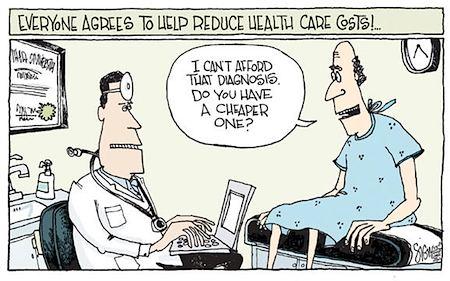 Medical Bills and Bankruptcy
 The Means Test was established by the Department of Justice. Here is a link to their site. The Means Test is not difficult to apply, though it can be complex if you have higher income or your personal finances themselves are complex.